
Skip to content

Degumming

Heating crude oil to around 70–90 °C for acid or water degumming, ahead of gum separation.

Recommended type

Standard Gasketed Plate Heat Exchanger

Phosphatide content drives this stage, which is why it matters most on soybean oil; other crudes still pass through it. Hydrated gums are sticky and raise the fouling rate, so where the crude runs high in phosphatides a wider channel buys a longer run between cleans.
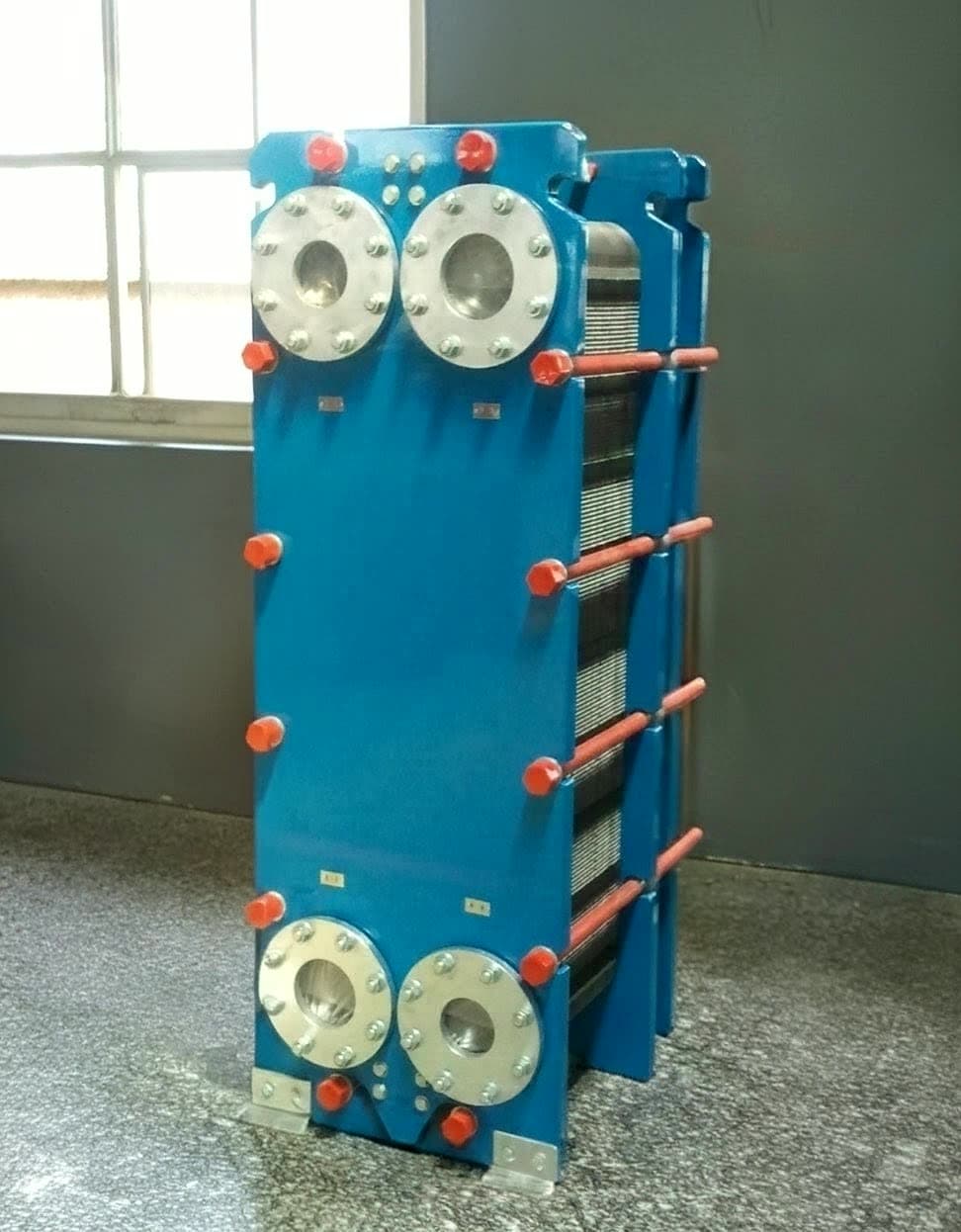
Gasketed units on their frames, built and waiting for despatch. The painted carbon-steel frame is what a gasketed plate heat exchanger normally looks like; the plate pack between the tie bars is stainless, and it is the pack, not the frame, that touches the process.

Also suitable

Chat with us