
Skip to content

Glycol regeneration cooling

Cooling lean glycol returning to the contactor after regeneration.

Recommended type

Standard Gasketed Plate Heat Exchanger

A close approach directly improves dehydration performance, which is what makes a plate pack worth its cost here. Glycol viscosity at the cold end drives the pressure drop and therefore the plate pattern.
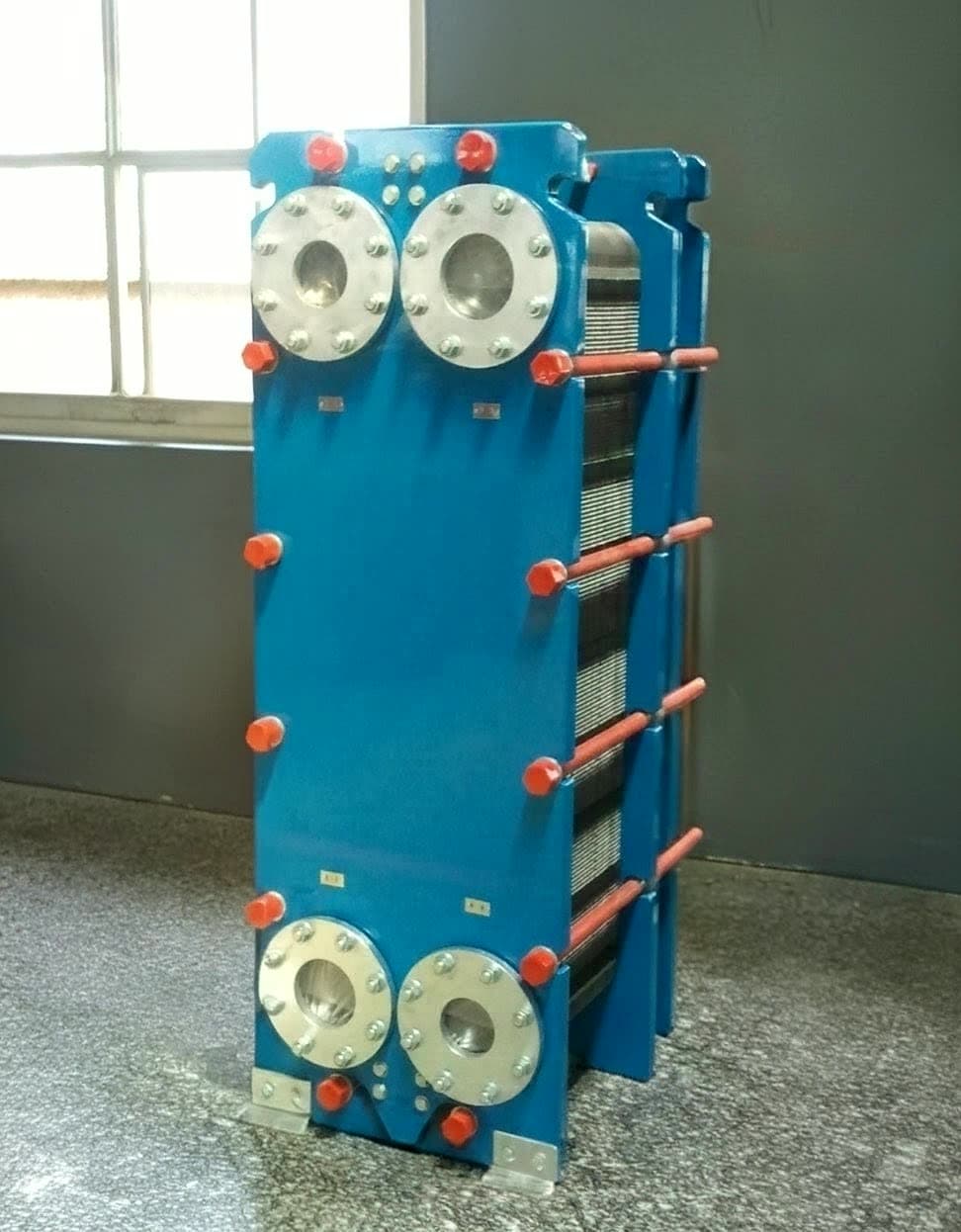
Gasketed units on their frames, built and waiting for despatch. The painted carbon-steel frame is what a gasketed plate heat exchanger normally looks like; the plate pack between the tie bars is stainless, and it is the pack, not the frame, that touches the process.

Also suitable

Chat with us